There is no sight more stressful for a truck owner than seeing the temperature needle climb into the red zone while hauling a heavy load or sitting in gridlock. F150 overheating is a serious issue that can transform a reliable workhorse into a pile of scrap metal if ignored. Whether you are battling 2006 ford f150 overheating issues with the classic Triton or dealing with modern 2018 f150 3.5 ecoboost overheating symptoms, understanding the “why” and “how” of cooling failure is vital.
In this guide, we break down the most common causes of the ford f150 overheating problem across various generations, helping you diagnose the fault and find the right parts to stay cool.
Cool Your Engine, Save Your Wallet
The difference between a $150 radiator hose and a $5,000 engine replacement is how fast you react to heat. Ensure your cooling system is pressurized and protected with the highest-rated components on the market.
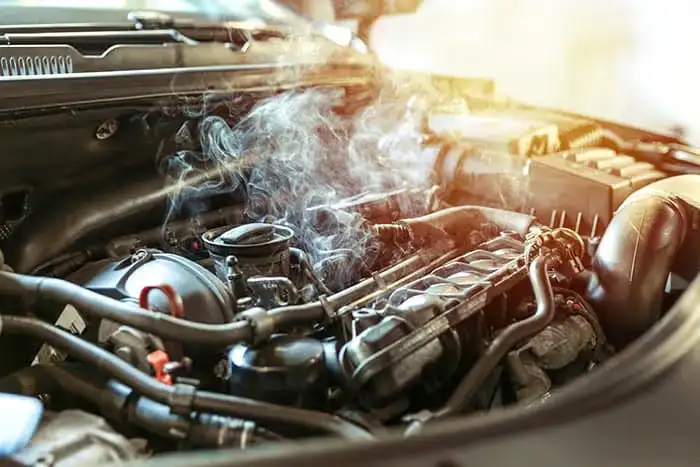
Generational Overheating Challenges: From Triton to EcoBoost
The Workhorse Era (2004–2010)
The tenth and eleventh-generation trucks are aging, and their cooling components are hitting their natural expiration dates.
- 2006 ford f150 overheating issues: Often caused by a failing fan clutch or a clogged radiator. These trucks rely on a mechanical fan that can lose its ability to “lock up” when the engine gets hot.
- Ford f150 5.4 overheating: The 5.4L Triton V8 generates significant heat. If you experience f150 overheating at highway speeds, it is almost always a sign that the radiator fins are clogged with debris or the internal tubes are restricted by mineral deposits.
The Coyote & Early EcoBoost Era (2011–2014)
These years introduced the high-revving 5.0L V8 and the twin-turbo 3.5L.
- 2013 f150 overheating & 2014 f150 overheating: These years are notorious for “Quick-Connect” coolant hose leaks. The plastic connectors near the reservoir tank become brittle and leak under pressure, causing a sudden loss of coolant.
- 2013 f150 5.0 overheating: Check the electric cooling fans. If one of the two fans fails, the truck may stay cool while driving but will quickly start f150 overheating when idling or in stop-and-go traffic.
The Modern Era (2015–2018)
Newer trucks use complex sensors and active grille shutters, adding more failure points to the ford f 150 overheating list.
- 2015 f150 false overheating: This is a specific electronic glitch. The Cylinder Head Temperature (CHT) sensor can fail, sending a “fake” signal to the dash that the engine is melting down, even when the coolant is actually at a safe temperature.
- 2018 f150 3.5 ecoboost overheating: Towing heavy loads uphill can push the EcoBoost cooling system to its limit. If you see the temp spike only under load, it may be time for a high-performance aftermarket radiator or a specialized intercooler upgrade.
Why is My F-150 Overheating? Top 5 Causes
- Low Coolant Levels: The simplest and most common cause. Check for leaks at the “T-connector” or the water pump.
- Failed Thermostat: If the thermostat stays closed, coolant can’t reach the radiator. This causes an instant ford f150 overheating problem.
- Electric Fan Failure: Common in 2016 f150 5.0 overheating cases; if the fans don’t spin, there is no airflow at low speeds.
- Air Pockets: If you recently changed your coolant and the truck is now f150 overheating, you likely have an air bubble trapped in the heater core.
- Water Pump Impeller Failure: Sometimes the internal blades of the pump wear down, meaning the pump “spins” but doesn’t actually move the fluid.
Common Symptoms Table
| Symptom | Probable Cause | Year/Engine Most Affected |
| Overheating at Idle | Electric Fan Failure | 2013 f150 5.0 overheating |
| Overheating at High Speeds | Clogged Radiator / Airflow | 2006 ford f150 overheating issues |
| Sudden Temp Spike (No Leak) | Stuck Thermostat | 2017 f150 overheating |
| Temp Needle Jumps to Red Instantly | CHT Sensor Failure | 2015 f150 false overheating |
| Coolant Smell but No Visible Leak | Cracked Reservoir Tank | 2014 ford f150 overheating issues |
Frequently Asked Questions (FAQ)
Q1: What should I do if my 2013 ford f150 overheating warning comes on while driving?
A: Immediately turn off the A/C and turn on the heater to full blast. This acts as a secondary radiator to pull heat away from the engine. Pull over safely and do NOT open the radiator cap while the engine is hot.
Q2: Is the 2015 f150 false overheating dangerous?
A: While the engine isn’t actually melting, the computer may put the truck into “Limp Mode” to protect it. You should replace the CHT sensor to restore normal driving and prevent a real overheat from going unnoticed.
Q3: Why is my f150 overheating at highway speeds but fine in town?
A: This is usually a sign of a restricted radiator. At high speeds, your engine is under more load and generates more heat, but if the radiator cannot flow enough coolant, the temperature will steadily rise.
Q4: Can a bad radiator cap cause f150 overheating?
A: Yes! The cap maintains the pressure required to raise the boiling point of the coolant. If the cap is faulty, the coolant will boil over at a lower temperature, leading to an overheat.
Q5: How often should I flush the coolant in my 2018 f150 overheating prevention plan?
A: Ford recommends every 100,000 miles, but for enthusiasts and those who tow, a flush every 50,000 miles using genuine Motorcraft Orange or Yellow coolant is much safer.
Stay Cool and Keep Moving
The cooling system is the life-support system of your Ford F-150. Don’t let a small leak or a worn-out fan turn into a catastrophic engine failure. Investing in high-quality cooling components today is the best way to ensure your truck remains the leader of the pack.