The Pressure Breach: 2026 Cylinder Head & Gasket Failure Guide
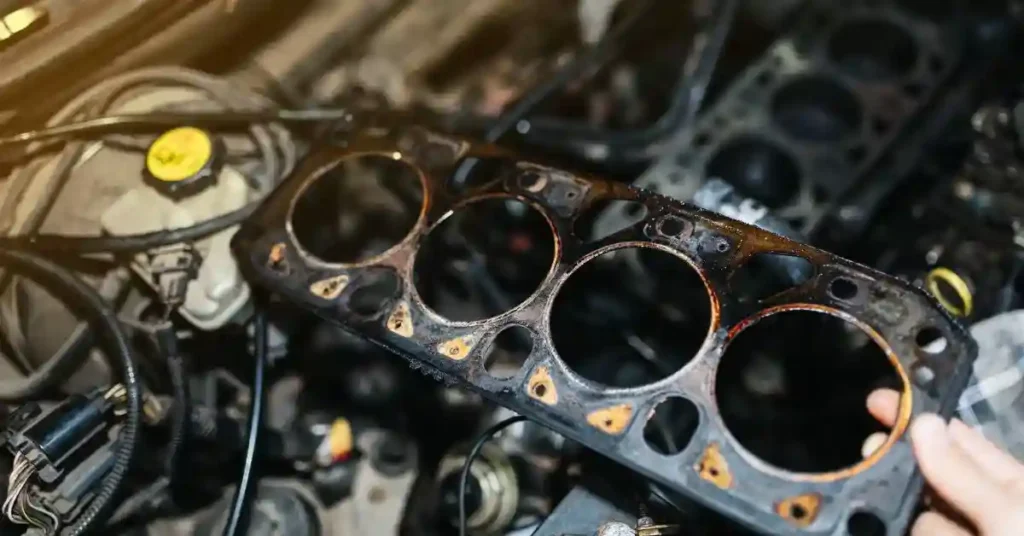
Deconstructs the “structural breach” of your engine’s thermal and pressure barrier: the Cylinder Head Gasket Failure. To achieve AutoFix Mastery, a Master knows that the head gasket is the most critical seal in the engine, responsible for keeping combustion gases, engine coolant, and oil separated as they travel between the engine block and the cylinder head. In 2026, as engines are designed with lighter alloys and higher turbocharger boost pressures, a Master knows that even a minor overheat can lead to a catastrophic cylinder head gasket failure, turning a high-performance machine into a stationary piece of scrap metal.
A Master knows that a “compromised” seal speaks through a sweet-smelling white cloud from the exhaust, a cooling system that “puffs” with air bubbles, or the dreaded “milkshake” appearance of oil contaminated with coolant.
Fel-Pro PermaTorque MLS Head Gasket Set for Honda Toyota Chevy Ford Victor Reinz Cylinder Head Gasket for BMW Audi Mercedes Dorman 917-142 Cylinder Head Bolt Set BlueDriver Bluetooth Pro OBD2 Scan Tool for Misfire Detection Block Tester Kit Combustion Leak Detector for Head Gasket Testing Professional Cooling System Pressure Tester Digital Infrared Thermometer for Engine Hot Spot Mapping ON AMAZON
[ ⚡ CLICK HERE TO SHOP DIRECT-FIT HEAD GASKETS & TEST KITS ON AMAZON ]
Mastery Matrix: Identifying Head Gasket & Cylinder Head Failure
In the world of AutoFix Mastery, we differentiate between a “Blown Gasket” and a “Cracked Head.” A Master knows that signs of cylinder head gasket failure often overlap with cylinder head failure symptoms, making a methodical diagnostic process essential to avoid replacing the wrong part.
| Failure Type | Primary Symptoms | Root Cause |
| External Coolant Leak | Coolant dripping down the side of the engine block. | Gasket material degradation or “scrubbing.” |
| Internal Combustion Leak | Rapid overheating and bubbles in the radiator. | Cylinder head gasket failure at the fire ring. |
| Inter-Cylinder Leak | Constant misfire on two adjacent cylinders. | Head gasket failure between cylinders. |
| Cylinder Head Crack | Coolant in oil (milkshake) and white exhaust smoke. | Cylinder head failure due to extreme overheating. |
Mastery Deep Dive: The Thermal Breach Pillars
1. The “Adjacent Misfire” Protocol
One of the most specific symptoms of a bad engine cylinder head gasket failure is a dead misfire on two side-by-side cylinders. A Master knows that head gasket failure between cylinders allows compression to “leak” from one cylinder into the next. This won’t always cause overheating or white smoke, but a Master confirms it by performing a compression test and seeing identical low readings on adjacent ports.
2. The “Milkshake” & White Smoke Indicators
Standard signs of cylinder head failure involve the mixing of fluids. If your oil dipstick looks like a chocolate milkshake, coolant has entered the lubrication system. Conversely, if your exhaust smells like maple syrup and produces thick white plumes, the engine is “burning” coolant. These are the hallmark cylinder head gasket failure symptoms that demand an immediate engine shutdown to prevent bearing damage.
3. The “Geyser” Effect: Combustion Gas Entry
When you have a cylinder head gasket failure, combustion pressure (thousands of PSI) can be forced into the cooling system. A Master knows that if the radiator hoses feel rock-hard immediately after startup, or if coolant sprays out of the reservoir like a geyser, you have a “breach to the water jacket.” This is a definitive cylinder head failure indicator where the head may have warped or the gasket has completely disintegrated.
4. Structural Integrity: Head vs. Gasket
To achieve AutoFix Mastery, you must inspect the metal. Signs of cylinder head failure (cracks in the aluminum) are often invisible to the naked eye. A Master always sends the head to a machine shop to be “pressure tested” and “surfaced.” If you ignore cylinder head failure symptoms and simply install a new gasket on a warped or cracked head, the failure will return within 500 miles.
Master’s Tech Tip: The “Block Test” Protocol
To achieve AutoFix Mastery, verify the chemistry. Master Tip: Use a Combustion Leak Detector (Block Tester) kit. This tool uses a blue chemical liquid that turns yellow or green when exposed to CO2 (exhaust gases) in the radiator. If the liquid changes color, you have 100% confirmation of cylinder head gasket failure symptoms, regardless of how well the car seems to be running.
[ 🏁 SEAL THE COMBUSTION – SHOP HEAD GASKET GEAR ON AMAZON ]
Final Verdict: The Guardian of Engine Compression
The cylinder head gasket is the thin line between a functional engine and a total loss. Whether you are identifying signs of cylinder head failure in a performance car or diagnosing cylinder head gasket failure in a family SUV, prioritize “PermaTorque” technology. In the world of AutoFix Mastery, we prioritize Fel-Pro and Victor Reinz to ensure the seal holds under the most extreme thermal loads.
Master the pressure. Master the seal. Be the master of the cylinder head.
Disclosure: As an Amazon Associate, I earn from qualifying purchases. Structural precision for a master-maintained machine!