Focuses on the “Golden Sequence” of jump-starting. In 2026, with vehicles packed with sensitive ECUs (Engine Control Units) and modern infotainment systems, the order in which you connect and disconnect jumper cables is no longer just about avoiding a spark—it’s about protecting thousands of dollars in onboard electronics. Following the “Red-to-Dead” protocol ensures that you create a safe, stable bridge between the two vehicles without risking a catastrophic short circuit.
To achieve AutoFix Mastery, the most critical step is the final ground. By connecting the last negative clamp to the chassis rather than the dead battery terminal, you move the inevitable “connection spark” away from the battery’s hydrogen gases, significantly reducing the risk of an explosion.
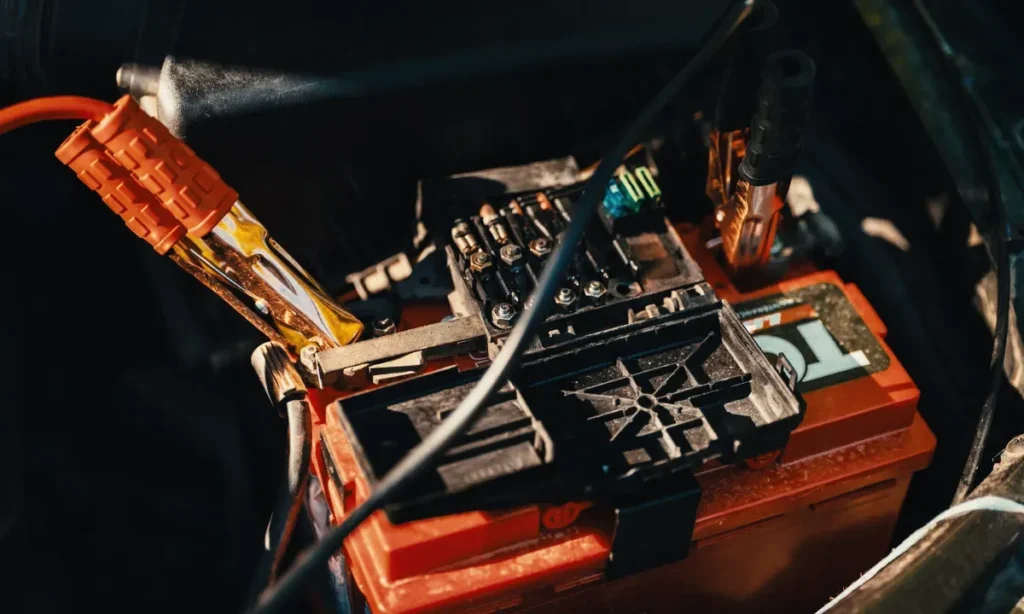
Best Heavy Duty Jumper Cables 2026 1 Gauge 25ft Pure Copper Professional Grade No-Tangle Clamps
[ ⚡ CLICK HERE TO SHOP PROFESSIONAL JUMPER CABLES ]
The 2026 Connection Protocol: “Red-to-Dead”
In the world of AutoFix Mastery, we follow the 1-2-3-4 sequence to ensure total electrical safety. Before starting, ensure both cars are in Park (or Neutral), ignitions are OFF, and the vehicles are not touching.
The Connection Order:
- RED to DEAD (+): Connect the first red clamp to the positive (+) terminal of the dead battery.
- RED to DONOR (+): Connect the other end of the red cable to the positive (+) terminal of the good (donor) battery.
- BLACK to DONOR (-): Connect the first black clamp to the negative (-) terminal of the good battery.
- BLACK to CHASSIS (Ground): Connect the final black clamp to a solid, unpainted metal part of the dead car’s engine block or frame (away from the battery).
The Disconnection Order: The Reverse Master
Once the dead vehicle is running, you must remove the cables in the exact reverse order to prevent an accidental short while the alternator is pumping high current.
| Step | Action | Why It’s Critical for Mastery |
| 1 | Remove BLACK from Chassis | Breaks the ground circuit at the safest point first. |
| 2 | Remove BLACK from Donor (-) | Isolates the negative side of the donor vehicle. |
| 3 | Remove RED from Donor (+) | Disconnects the “live” bridge from the running car. |
| 4 | Remove RED from Dead (+) | Finalizes the process; prevents the “live” red clamp from touching metal. |
Mastery Deep Dive: The Safety Pillars
1. Why “Red to Dead” First?
For AutoFix Mastery, the logic is simple: if you connect the red cable to the “good” battery first, the other end becomes “live.” If that loose end accidentally touches any metal part of either car, it will create a massive short circuit. By connecting to the dead battery first, you ensure the cable only becomes truly live once it reaches the donor vehicle.
2. The “Grounding” Secret
A Master never connects the final black clamp to the negative post of the dead battery. Why? Because a charging battery can emit hydrogen gas. The final connection always creates a small spark. By grounding to the chassis or a bolt on the engine block, you keep that spark 2–3 feet away from the battery’s vent caps.
3. The 2-Minute Idle Rule
To achieve AutoFix Mastery, don’t try to start the dead car the second the cables are on. Start the donor car and let it run at a slightly elevated idle (around 1,500 RPM) for 2 to 5 minutes. This “pre-charges” the dead battery’s surface, making it much easier for the starter motor to draw the high current it needs.
Master’s Tech Tip: The “Key in Pocket” Rule
To achieve AutoFix Mastery, always keep your keys in your pocket during a jump-start. Some modern security systems can “glitch” during a sudden voltage surge and automatically lock the doors. If your keys are in the ignition and the car starts and locks itself, you’ll be stranded with a running car and a locked door!
[ 🏁 MASTER THE BRIDGE – SHOP EMERGENCY JUMPER KITS ON AMAZON ]
Final Verdict: Precision in the Panic
The Jumper Cable Order is the most basic yet most vital skill in automotive maintenance. In the world of AutoFix Mastery, we believe that doing it right is more important than doing it fast. By following the 1-2-3-4 sequence and the reverse disconnection, you protect your vehicle’s computer, avoid dangerous sparks, and ensure that a simple dead battery remains a minor detour rather than an expensive repair.
Master the order. Master the safety. Be the master of the jump.
Disclosure: As an Amazon Associate, I earn from qualifying purchases. Precision protection for a master-maintained machine!