one of the most common questions in the garage: can you actually “fix” a dead car battery? In 2026, the answer is often yes, provided the damage is chemical rather than physical. Most “dead” batteries are simply victims of sulfation—a buildup of lead-sulfate crystals that prevents the battery from accepting or holding a charge. Modern reconditioning techniques and smart desulfators can often recover 60% to 90% of a battery’s original capacity, potentially adding two years to its lifespan.
To achieve AutoFix Mastery, we distinguish between “surface fixes” (cleaning terminals) and “deep fixes” (desulfation and electrolyte balancing). A battery with a cracked case or a shorted internal cell is a safety hazard and must be recycled, but a sulfated battery is just a dormant powerhouse waiting to be revived.
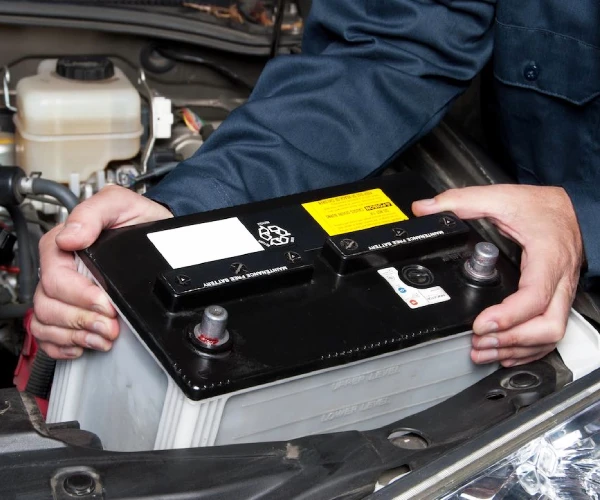
Best Car Battery Reconditioning Kit 2026 Desulfator Charger Epsom Salt Distilled Water Battery Terminal Cleaner
[ 🛠️ CLICK HERE TO SHOP BATTERY REPAIR TOOLS ON AMAZON ]
The 2026 “Fix” Standard: Diagnosis First
In the world of AutoFix Mastery, we don’t guess; we measure. Before attempting a fix, use a multimeter to check the “resting voltage”:
- 12.6V – 12.4V: Healthy. Just needs a maintenance charge.
- 12.0V – 12.3V: Weak. Likely sulfated; a prime candidate for reconditioning.
- 10V – 11V: Critically low. May have a dead cell; proceed with caution.
- Below 10V: Often non-recoverable. This usually indicates a physical internal failure.
Top 5 Battery “Fixing” Tools & Methods for 2026
| Method | Tool Required | Best For… | Difficulty | Expected Result |
| Desulfation | NOCO Genius 5/10 | Lead-acid/AGM | Beginner | Dissolves crystal buildup via pulsed current. |
| Terminal Repair | NSPA Repair Kit | Corroded connectors | Intermediate | Restores 100% electrical conductivity to the car. |
| Chemical Revive | Epsom Salt & Distilled Water | Old flooded batteries | Advanced | Re-activates dormant plates (Standard batteries only). |
| Post Repair | Pile Head Die Tool | Deformed posts | Intermediate | Reshapes lead posts for a perfect clamp fit. |
| Deep Cycle Fix | Pulse Max F16 | Battery banks/Marine | Professional | High-frequency pulse tech for severe sulfation. |
Mastery Deep Dive: The Restoration Pillars
1. The “Chemical Flush” (Flooded Batteries Only)
For AutoFix Mastery, if you have a standard “removable cap” battery, you can attempt a chemical restoration. Dissolve Magnesium Sulfate (Epsom Salt) into warm distilled water and top off each cell. The salt helps break down the hardened sulfur on the lead plates. Once filled, run a 24-hour slow charge (2 Amps). Master’s Warning: Never attempt this on “Maintenance Free” or AGM (sealed) batteries, as they cannot be opened safely.
2. Restoring the “Post Connection”
A Master knows that many “dead” batteries are actually fine—the connection is just broken. If your battery posts are pitted or melted from arcing, use a Battery Pile Head Repair Tool. These specialized dies are hammered onto the lead post to shave it back into a perfect 18mm (Positive) or 16mm (Negative) cylinder. A clean, tight connection can solve “flickering light” issues instantly.
3. Neutralizing the “Green Crust”
To achieve AutoFix Mastery, don’t just scrape off terminal corrosion. Use a 2:1 ratio of Baking Soda and Distilled Water to create a paste. This chemically neutralizes the sulfuric acid. Scrub with a wire brush until the bubbling stops, then apply a Battery Protector Spray (or a thin layer of petroleum jelly) to create an airtight seal that prevents oxygen from reaching the metal.
Master’s Tech Tip: The “Voltage Jump” Trick
To achieve AutoFix Mastery, if your smart charger won’t start because the battery is “too dead” (below 1V), you can “trick” it. Connect the dead battery in parallel (Positive to Positive, Negative to Negative) to a known good battery using jumper cables. Turn on the charger. The charger will sense the voltage from the good battery and begin charging both. After 15 minutes, remove the good battery; the dead one should now have enough surface charge for the smart charger to continue the cycle solo.
[ 🏁 REVIVE YOUR DRIVE – SHOP BATTERY FIXING KITS ON AMAZON ]
Final Verdict: Maintenance is the Best Repair
“Fixing” a battery is a skill every master should have, but the Top 10 Best Portable Lithium Jump Starters and NOCO Genius chargers we covered in previous articles are your best defense. In the world of AutoFix Mastery, we use reconditioning as a way to save money and reduce waste. By understanding the chemistry inside the black box, you can turn a “tow truck situation” into a simple weekend project.
Master the chemistry. Master the connection. Be the master of the fix.
Disclosure: As an Amazon Associate, I earn from qualifying purchases. Restored reliability for a master-maintained machine!