The Rattle Code: 2026 Sway Bar & Stabilizer Link Symptom Guide
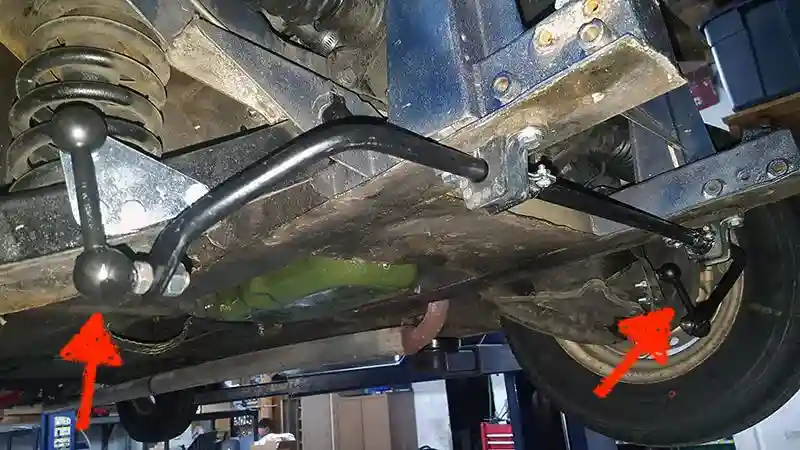
Deconstructs the “rhythm of the road”: Symptoms of a Bad Sway Bar Link. To achieve AutoFix Mastery, a Master knows that the sway bar (or stabilizer bar) is the component responsible for keeping your vehicle level during cornering. The links are the small but mighty rods that connect this heavy bar to your suspension. In 2026, as vehicles become heavier with hybrid and EV batteries, a Master knows that these ball-and-socket links typically reach their service limit between 60,000 and 90,000 miles.
A Master knows that bad sway bar link symptoms are the most common source of “mystery noises” in a modern suspension.
Moog K750616 Front Sway Bar Link Kit Pair Mevotech Supreme Rear Stabilizer Bar Link AC Delco Professional Front Sway Bar Bushing Kit Suspension Dudes Heavy Duty Stabilizer Bar Link Set 24-Inch Heavy Duty Pry Bar for Suspension Testing Professional Chassis Ear Electronic Diagnostic Tool ON AMAZON
[ ⚡ CLICK HERE TO SHOP SWAY BAR LINK KITS ON AMAZON ]
The Master’s Symptom Matrix: Front vs. Rear
In the world of AutoFix Mastery, we categorize stabilizer bar link symptoms by where the noise originates and how the vehicle behaves under lateral load.
| Symptom Category | Likely Culprit | Symptoms of a Bad Sway Bar |
| Rattling over “Washboard” Roads | Bad front sway bar link symptoms | Small ball joints in the links have developed “play,” causing a rapid chattering. |
| Loud “Clunk” on Speed Bumps | Bad front sway bar symptoms | The sway bar bushings are worn, allowing the heavy bar to metal-thump the frame. |
| Excessive Body Roll in Corners | Bad stabilizer bar symptoms | The bar is no longer effectively transferring load, making the car feel “soupy.” |
| Noise from the Trunk Area | Bad rear sway bar link symptoms | Rear links have failed, often noticed when pulling into a steep driveway. |
| Vibration in the Floorboard | Both | The vibration of a loose link travels through the control arm and into the chassis. |
Mastery Deep Dive: The Suspension Pillars
1. The “Tinny Chatter” Warning
For AutoFix Mastery, recognize the frequency. A Master knows that bad stabilizer bar link symptoms don’t sound like a heavy hammer; they sound like a loose marble in a tin can. This noise is most prominent during small, rapid suspension movements—like driving over a gravel driveway or uneven pavement—rather than large dips in the road.
2. The “Body Roll” Reality
A Master knows the physics of the turn. If you feel the vehicle “diving” or leaning excessively when taking a highway off-ramp, you are experiencing symptoms of a bad sway bar link. To achieve AutoFix Mastery, recognize that when a link snaps or its socket becomes too loose, the sway bar is effectively disconnected. This significantly reduces your vehicle’s handling safety during emergency maneuvers.
3. The “Manual Shake” Test
To achieve AutoFix Mastery, use your hands. A Master knows that some sway bar link symptoms only appear when the suspension is “loaded.” Master Tip: With the car on the ground, reach behind the tire and grab the link. Give it a violent shake. If you feel any movement or hear a “click,” the link is finished. If it’s too tight to move by hand, use a 24-inch Pry Bar to lever the sway bar against the control arm to check for hidden play.
Master’s Tech Tip: The “Greaseable” Upgrade
To achieve AutoFix Mastery, look at the hardware. Most factory links are “sealed for life,” meaning once the grease dries out, the part dies. Master Tip: When you replace a bad sway bar link, a Master chooses Moog Problem Solver or Mevotech Supreme parts that feature Grease Zerks. By adding fresh grease during every oil change, you can make these links last 2x to 3x longer than the original factory parts.
[ 🏁 SILENCE THE RATTLE – SHOP STABILIZER REPAIR GEAR ON AMAZON ]
Final Verdict: Restoring the Level Ride
The stabilizer link is a small part with a massive impact on your driving comfort and safety. Whether you are dealing with bad front sway bar link symptoms or looking to silence a noisy rear end, high-quality replacements are the only answer. Replace them in pairs, upgrade to greaseable units, and keep your vehicle’s cornering flat and quiet through 2030 and beyond.
Master the link. Master the corner. Be the master of the sway bar.
Disclosure: As an Amazon Associate, I earn from qualifying purchases. Structural silence for a master-maintained machine!